
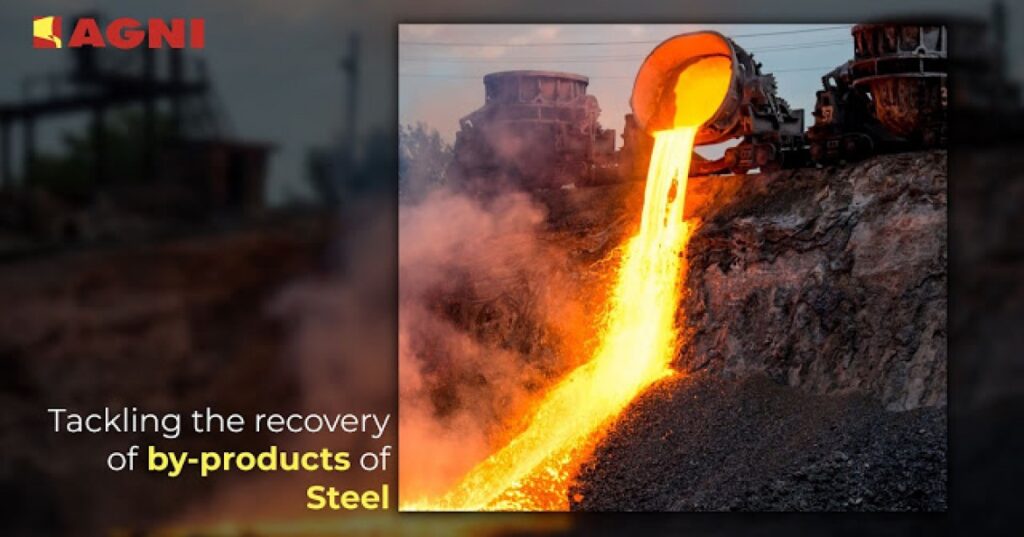
On average, the production of one tonne of steel results in 200 kg ( in an Electric Arc Furnace) to 400 kg (Blast Furnace / Basic Oxygen Furnace) of by-products. These include slags, dusts, sludges and other materials. Over the last 2 decades, Steel Industries has concentrated on the recovery rate of the by-products in the manufacturing processes. The innovative technologies and developments to tackle this, along with the assistance and collaboration of other industries, have brought the aim of zero waste closer each day.
The recycling and use of Steel by-products has contributed to a high degree of raw-material efficiency, increasing productivity, and also minimising waste. These ongoing efforts have raised the efficiency rate worldwide to 97. 6%, and the goal is to achieve 100 per cent efficiency with zero waste.
Here are the main by-products of Steel manufacturing and possible reuses:
Solid Waste: Slag
More than 400 million tonnes of iron and steel slag are produced each year. Slags are a mixture of silica, calcium oxide, magnesium oxide, and aluminium and iron oxides. The separation of slag from the production cycle is easy, due to its lightweight. These slags are used asa replacement for clinker for the manufacturing of composite cement and also to produce eco-friendly, green cement produced to reduce carbon footprint and is available at a lower price. Slag has become a very important raw-material for the Cement and Concrete industry. Lime separated from the slag through various technologies available can be used as a fertiliser, for water treatment, and in coastal areas to encourage coral growth.
By-product Gases
Once cleaned, by-product gases produced during Steel production processes serve as an attractive energy source option for an efficient power supply. Depending on the production process followed, three main gases formed as by-products are Coke Gas (Hydrogen & Methane), Blast Furnace Gas (Hydrogen & Carbon monoxide), and Converter Gas (Carbon monoxide). These by-product gases are mainly used internally, in the manufacturing setups, as an alternate source of power to run various processes. The usage of these available product gases on-site reduces the dependence on natural resources, minimising fuel prices and carbon emissions. These gases serve for both the power requirements at a steel-making engine, steam and electricity needs. Gases can be fully reused within the steel production site, and can provide up to 60% of the plant’s power. They can also be sold for power generation to earn additional revenue.
Check out the waste management by the steel manufacturing plant
At Agni Steels, we ensure we follow the appropriate norms and facilities for minimal waste and recycling and using by-products as and when possible, without compromising the quality of our processes and final products.
Circular Economy in Steel Manufacturing
Steel is one of the most recyclable materials in the world, and modern steel manufacturing strongly supports the circular economy model. By reusing by-products such as slag, dust, and process gases, steel plants reduce the need for virgin raw materials. This closed-loop approach not only conserves natural resources but also significantly lowers environmental impact.
Agni Steels actively supports circular economy principles by integrating by-product reuse into its production lifecycle.
Dusts and Sludges: Turning Waste into Resources
Dusts and sludges generated during steel production contain valuable metals such as iron, zinc, and carbon. Advanced recovery technologies allow these materials to be:
-
Reintroduced into the steel-making process
-
Used in sinter plants and pelletisation
-
Processed for metal recovery by allied industries
This minimises landfill disposal and improves raw material efficiency.
Water Recycling and Wastewater Management
Water is a critical resource in steel manufacturing. Modern plants employ closed-loop water recycling systems to treat and reuse wastewater.
Benefits include:
-
Reduced freshwater consumption
-
Controlled discharge into the environment
-
Compliance with environmental regulations
Agni Steels follows strict water management practices to ensure responsible usage and zero harmful discharge.
Energy Recovery and Emission Reduction
By-product gas utilisation significantly contributes to:
-
Lower fossil fuel dependency
-
Reduced greenhouse gas emissions
-
Improved energy efficiency
Capturing and reusing gases within the plant helps Agni Steels optimise energy consumption while supporting cleaner steel production.
Environmental Compliance and Certifications
Steel plants operating with high recovery rates adhere to:
-
National pollution control board guidelines
-
Environmental impact norms
-
Workplace safety standards
Maintaining compliance ensures responsible operations and reinforces trust among customers and stakeholders.
Innovation and Technology in Waste Minimisation
Continuous research and technological innovation play a vital role in achieving zero waste steel production. Technologies such as:
-
Slag granulation
-
Gas recovery systems
-
Automated waste segregation
are helping the steel industry move closer to 100% by-product utilisation.
Agni Steels continues to invest in modern technologies to enhance efficiency and sustainability.
Economic Benefits of By-product Utilisation
Recycling and reuse of steel by-products offer significant economic advantages:
-
Reduced raw material procurement costs
-
Lower waste disposal expenses
-
Additional revenue streams from by-product sales
-
Increased operational efficiency
These benefits help maintain competitive pricing without compromising quality.
Commitment of Agni Steels to Sustainable Manufacturing
Sustainability is integral to Agni Steels’ manufacturing philosophy. By focusing on:
-
Maximum by-product recovery
-
Reduced environmental footprint
-
Efficient resource utilisation
Agni Steels ensures responsible steel production aligned with global sustainability goals, while delivering high-quality steel products to customers.
